
Generative Engine Optimization (GEO)
The digital marketing landscape is evolving faster than ever. Traditional search engine optimization (SEO) has long been the foundation of online visibility, but the rise of artificial intelligence is changing how people discover information online. This shift has given birth to a new discipline called Generative Engine Optimization (GEO).
As AI-powered search experiences become more popular through tools like ChatGPT, Google’s AI Overviews, Microsoft’s Copilot, and other generative search engines, businesses must rethink their content strategies. Instead of simply ranking on search engine result pages (SERPs), brands now need to optimize content so AI systems can understand, trust, and reference it when generating answers.
In this comprehensive guide, you’ll learn what GEO is, why it matters, how it differs from traditional SEO, and the best practices to help your content appear in AI-generated responses.
What Is Generative Engine Optimization?
Generative Engine Optimization (GEO) is the process of optimizing digital content so that artificial intelligence-powered search engines and generative AI systems can easily discover, understand, trust, and cite it when generating responses for users.
Unlike traditional SEO, which focuses on achieving high rankings in search results, GEOaims to increase the likelihood that AI tools reference your content when answering user questions.
For example, when someone asks an AI assistant:
“What are the best digital marketing strategies for small businesses?”
The AI generates an answer by analyzing multiple sources. GEO ensures that your content becomes one of those trusted sources.
Why Generative Engine Optimization Matters
search landscape is changing dramatically. More users are now turning to AI assistants instead of traditional search engines for quick answers.
Key reasons why GEO matters include:
1. Growing AI Search Adoption
Millions of users rely on AI-powered platforms daily to find information, products, and services.
2. Increased Brand Visibility
When AI systems cite your content, your brand gains authority and recognition.
3. Higher Trust and Credibility
AI-generated answers often prioritize reliable, well-structureThe d content.
4. Future-Proof Marketing Strategy
Businesses that adopt GEO early can gain a competitive advantage as AI search continues to grow.
.
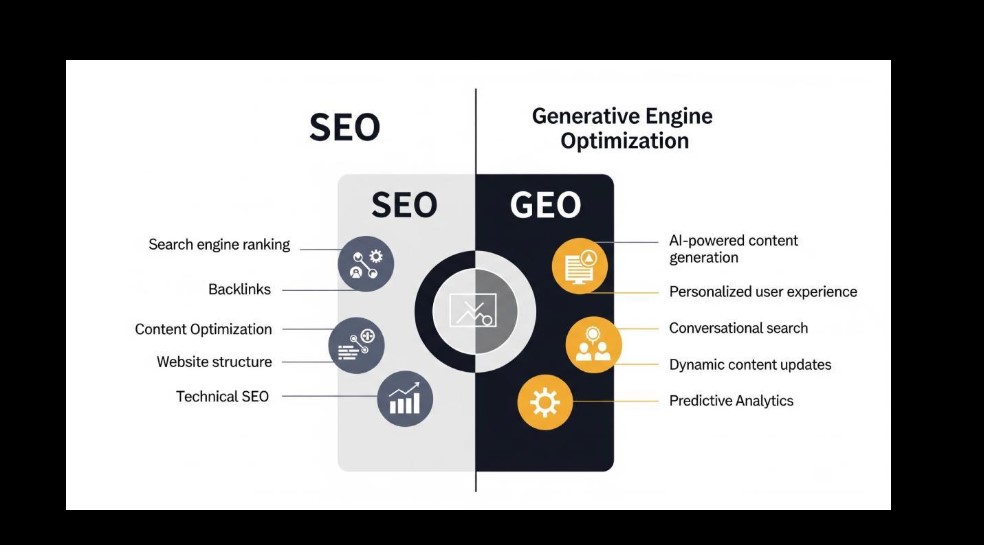
Generative Engine Optimization vs Traditional SEO
Lorem ipsum dolor sit amet, consectetur adipiscing elit. Ut elit tellus, luctus nec ullamcorper mattis, pulvinar dapibus leo.
Key Applications of AI Agents in Digital Marketing
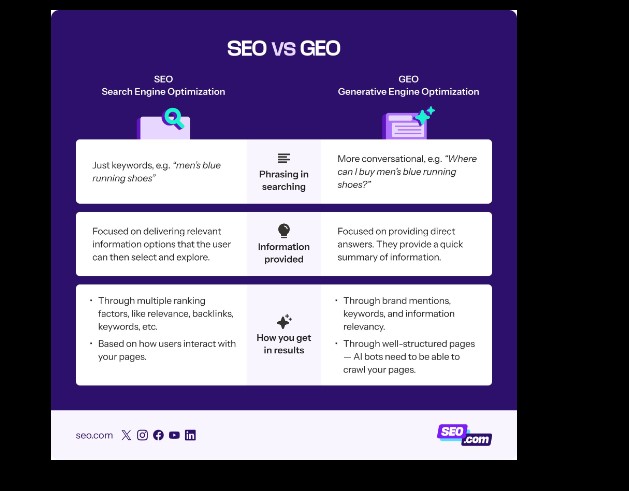
Although they share similarities, GEO and SEO have distinct objectives.
Factor | Traditional SEO | Generative Engine Optimization |
Goal | Rank on SERPs | Be referenced by AI |
Focus | Keywords & rankings | Context & authority |
Success Metric | Organic traffic | AI citations & mentions |
Content Style | Search-friendly | AI-understandable |
User Experience | Click-throughs | Direct answers |
Traditional SEO remains important, but GEO expands optimization efforts beyond rankings to include AI visibility.
Key Applications of AI Agents in Digital Marketing
AI systems analyze enormous amounts of information before generating responses. They evaluate:
- Content quality
- Expertise
- Contextual relevance
- Authority
- Accuracy
- User intent
- Semantic relationships
To improve visibility through Generative Engine Optimization, content must be:
- Well-structured
- Factually accurate
- Easy to understand
- Comprehensive
- Authoritative
AI models tend to prefer content that clearly answers user questions and demonstrates expertise.
Core Principles of Generative Engine Optimization
Create Comprehensive Content
AI systems favor content that provides complete answers.
Instead of writing:
“SEO helps websites rank.”
Write:
“SEO improves website visibility by optimizing content, technical performance, user experience, and authority signals to help search engines understand and rank web pages.”
Comprehensive explanations provide richer context for AI models.
Use Natural Language
Modern AI systems understand conversational language.
Rather than stuffing keywords repeatedly, write naturally while incorporating your target keyword strategically.
For example:
- What is Generative Engine Optimization?
- Why is Generative Engine Optimization important?
- How can businesses implement Generative Engine Optimization?
This approach aligns with how users interact with AI assistants.
Demonstrate Expertise
AI systems increasingly prioritize expertise and authority.
Ways to demonstrate expertise:
- Include industry research
- Cite credible sources
- Share case studies
- Publish original insights
- Use expert author profiles
Structure Content Clearly
AI models prefer content with:
- Headings
- Subheadings
- Bullet points
- Tables
- FAQs
- Step-by-step explanations
A well-organized article is easier for AI systems to process.
Best Practices for Generative Engine Optimization
Answer Questions Directly
Users increasingly ask conversational questions.
Example:
Question: What is Generative Engine Optimization?
Answer: Generative Engine Optimization is the practice of optimizing content so AI-powered search engines can understand and reference it when generating responses.
Direct answers improve AI extraction and citation opportunities.
Optimize for User Intent
Understand what users truly want.
Common intents include:
- Informational
- Navigational
- Transactional
- Commercial investigation
Content that aligns with intent performs better in both SEO and GEO.
Use Semantic Keywords
Instead of focusing on one keyword repeatedly, include related terms such as:
- AI search optimization
- AI-powered search
- Generative AI search
- Large language models
- AI content visibility
- Search engine optimization
Semantic relevance helps AI understand broader context.
Build Topical Authority
Create content clusters around related topics.
For example:
Main Topic: Generative Engine Optimization
Supporting articles:
- AI Search Trends
- AI Content Marketing
- GEO Best Practices
- AI Search Ranking Factors
- Future of AI Search
This signals expertise to both search engines and AI systems.
Content Strategies for Generative Engine Optimization
To succeed with Generative Engine Optimization, businesses should focus on creating high-value content.
Long-Form Guides
Detailed articles often provide richer context for AI systems.
Research-Based Content
Original studies and data attract citations.
FAQs
Frequently asked questions align naturally with AI-generated answers.
Expert Interviews
Expert insights improve trustworthiness.
Case Studies
Real-world examples help establish authority.
Technical Factors in Generative Engine Optimization
Technical optimization remains important.
Fast Loading Speed
AI systems often prioritize high-quality user experiences.
Mobile Optimization
Most users access content through mobile devices.
Structured Data
Schema markup helps machines understand content.
Examples:
- FAQ Schema
- Article Schema
- Organization Schema
- Product Schema
Secure Website
HTTPS remains a trust signal.
The Role of E-E-A-T in Generative Engine Optimization
Google’s E-E-A-T framework stands for:
- Experience
- Expertise
- Authoritativeness
- Trustworthiness
These principles are increasingly important for AI-powered search systems.
To strengthen E-E-A-T:
- Publish expert-written content
- Include author bios
- Reference trusted sources
- Keep content updated
- Showcase real-world experience
Strong E-E-A-T signals improve the likelihood of AI citations.
Common Mistakes to Avoid in Generative Engine Optimization
Keyword Stuffing
Overusing keywords can reduce readability and trust.
Thin Content
Short, low-value content often lacks sufficient context.
Ignoring Authority Signals
AI systems favor trusted sources.
Poor Structure
Large blocks of text are difficult for AI systems to process.
Outdated Information
Regular updates improve credibility and relevance.
Future of Generative Engine Optimization
The future of search is becoming increasingly AI-driven.
Emerging trends include:
AI-Generated Search Results
Users may receive answers directly instead of clicking links.
Conversational Search
Natural-language interactions will continue growing.
Personalized Responses
AI systems will generate increasingly customized answers.
Multi-Modal Search
Text, images, audio, and video will work together.
Businesses that embrace Generative Engine Optimization today will be better positioned for tomorrow’s digital ecosystem.
Benefits of Generative Engine Optimization for Businesses
Organizations adopting GEO can gain several advantages:
- Greater visibility in AI-generated responses
- Increased brand recognition
- Improved authority and trust
- Better user engagement
- Long-term competitive advantag
- Enhanced content discoverability
- Stronger alignment with future search behavior
As AI continues transforming search experiences, GEO becomes an essential component of digital marketing strategy.
Frequently Asked Questions About Generative Engine Optimization
What is Generative Engine Optimization?
Generative Engine Optimization is the process of optimizing content so AI-powered search engines can understand, trust, and cite it in generated responses.
Is Generative Engine Optimization replacing SEO?
No. GEO complements traditional SEO rather than replacing it. Businesses should integrate both strategies.
Why is Generative Engine Optimization important?
It helps brands gain visibility in AI-generated answers, which are becoming increasingly common across search platforms.
How can I improve Generative Engine Optimization?
Focus on quality content, clear structure, authority, semantic relevance, and user-focused information.
Who should use Generative Engine Optimization?
Businesses, marketers, publishers, content creators, and website owners can all benefit from GEO strategies.
Conclusion
Generative Engine Optimization represents the next evolution of digital visibility. As AI-powered search engines become more influential, businesses must adapt their content strategies to ensure they remain discoverable in AI-generated responses.
While traditional SEO focuses on ranking pages, Generative Engine Optimization focuses on becoming a trusted source for AI systems. By creating authoritative, well-structured, comprehensive content that directly answers user questions, organizations can improve their chances of being cited and referenced by generative AI platforms.
The future of search is no longer just about rankings—it’s about becoming part of the answer. Companies that invest in Generative Engine Optimization today will be better prepared for the AI-driven search ecosystem of tomorrow.