

Introduction to AI Agents in Digital Marketing
The digital marketing landscape is evolving at an unprecedented pace. Businesses are constantly searching for innovative ways to engage customers, improve campaign performance, and maximize return on investment (ROI). One of the most significant developments driving this transformation is the rise of AI Agents in Digital Marketing.
Unlike traditional automation tools that follow predefined rules, AI agents can analyze data, learn from interactions, make decisions, and execute tasks autonomously. These intelligent systems are reshaping how marketers create content, manage campaigns, personalize customer experiences, and optimize conversions.
As organizations increasingly embrace artificial intelligence, understanding the role of AI agents has become essential for marketers looking to stay competitive in today’s digital ecosystem.
.
What Are AI Agents in Digital Marketing?
AI Agents in Digital Marketing are autonomous software systems powered by artificial intelligence technologies such as machine learning, natural language processing (NLP), predictive analytics, and generative AI
These agents can:
- Analyze customer behavior
- Automate repetitive marketing tasks
- Generate personalized content
- Optimize advertising campaigns
- Predict future customer actions
- Improve customer support
Unlike standard automation software, AI agents continuously learn and adapt based on new data, making them significantly more effective over time.
.
Why AI Agents in Digital Marketing Are Becoming Essential
Today’s consumers expect personalized experiences across every digital touchpoint. Meeting these expectations manually is nearly impossible for growing businesses.
AI agents help marketers:
- Process large volumes of customer data
- Deliver personalized experiences at scale
- Improve marketing efficiency
- Reduce operational costs
- Increase campaign performance
- Enhance customer satisfaction
Companies using AI-powered marketing solutions are already experiencing faster decision-making and improved business outcomes.
Key Applications of AI Agents in Digital Marketing
1. Personalized Customer Experiences
Personalization is no longer optional.
AI agents analyze customer behavior, browsing patterns, purchase history, and engagement data to create highly personalized experiences.
Examples include:
- Product recommendations
- Personalized emails
- Dynamic website content
- Customized offers
Customers are more likely to engage with brands that understand their preferences and needs.
2. AI-Powered Content Creation
Content remains one of the most important components of digital marketing.
Modern AI agents can assist marketers by generating:
- Blog articles
- Social media posts
- Product descriptions
- Ad copy
- Email campaigns
- Video scripts
This allows marketing teams to produce high-quality content more efficiently while maintaining consistency across channels.
3. Intelligent Chatbots and Virtual Assistants
Customer service has become a major differentiator for brands.
AI-powered chatbots can:
- Answer customer questions
- Resolve support requests
- Qualify leads
- Schedule appointments
- Provide product recommendations
These virtual assistants operate 24/7, improving customer satisfaction while reducing support costs.
4. Predictive Analytics
One of the strongest advantages of AI Agents in Digital Marketing is predictive analytics.
AI systems can forecast:
- Customer purchasing behavior
- Campaign performance
- Customer lifetime value
- Churn probability
- Market trends
By anticipating future outcomes, marketers can make smarter strategic decisions.
5. Advertising Campaign Optimization
Managing digital advertising campaigns manually can be complex and time-consuming.
AI agents continuously monitor:
- Click-through rates
- Conversion rates
- Audience engagement
- Cost per acquisition
- Ad performance
They automatically adjust bids, targeting, and budgets to maximize results.
This leads to:
- Lower advertising costs
- Higher ROI
- Improved conversion rates
Benefits of AI Agents in Digital Marketing
Increased Efficiency
AI automates repetitive tasks, allowing marketers to focus on strategy and creativity.
Better Decision-Making
Real-time insights help businesses make data-driven decisions faster.
Enhanced Personalization
Customers receive tailored experiences based on their preferences and behavior.
Improved Customer Engagement
AI enables more relevant interactions across multiple channels.
Higher Conversion Rates
Personalized messaging and optimized campaigns drive better results.
Cost Reduction
Automation reduces the need for manual labor while improving operational efficiency.
How AI Agents Improve Customer Journey Management
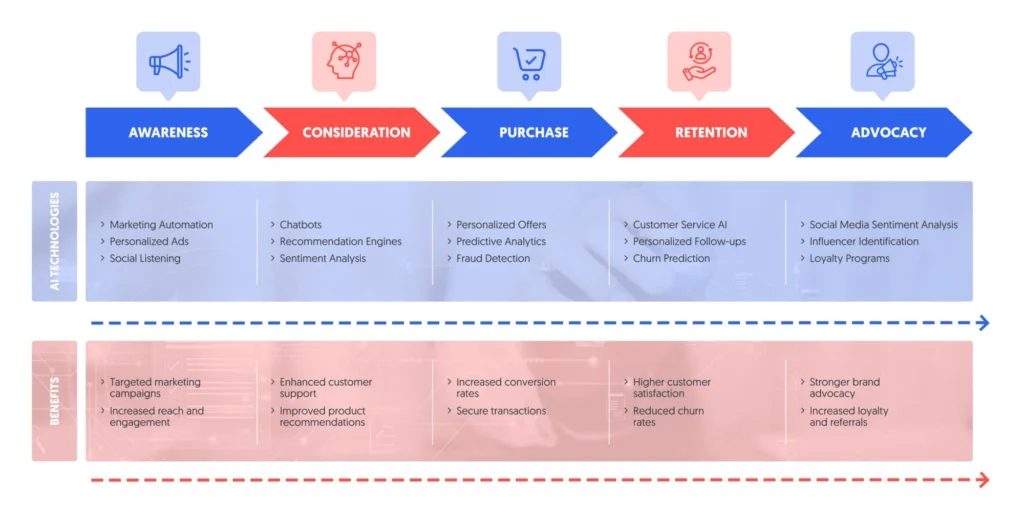
The customer journey consists of multiple stages:
- Awareness
- Consideration
- Decision
- Retention
- Advocacy
AI agents can support every stage.
Awareness Stage
AI helps identify target audiences and optimize content distribution.
Consideration Stage
Personalized recommendations increase engagement.
Decision Stage
Predictive analytics help convert prospects into customers.
Retention Stage
AI-powered loyalty campaigns improve customer retention.
Advocacy Stage
Satisfied customers become brand advocates through personalized experiences.
AI Agents in Digital Marketing for Lead Generation
Lead generation is one of the most valuable applications of AI.
AI agents can:
- Identify high-quality prospects
- Score leads automatically
- Segment audiences
- Personalize outreach campaigns
- Nurture leads through automation
This enables sales and marketing teams to focus on opportunities with the highest likelihood of conversion.
The Role of Generative AI in Digital Marketing
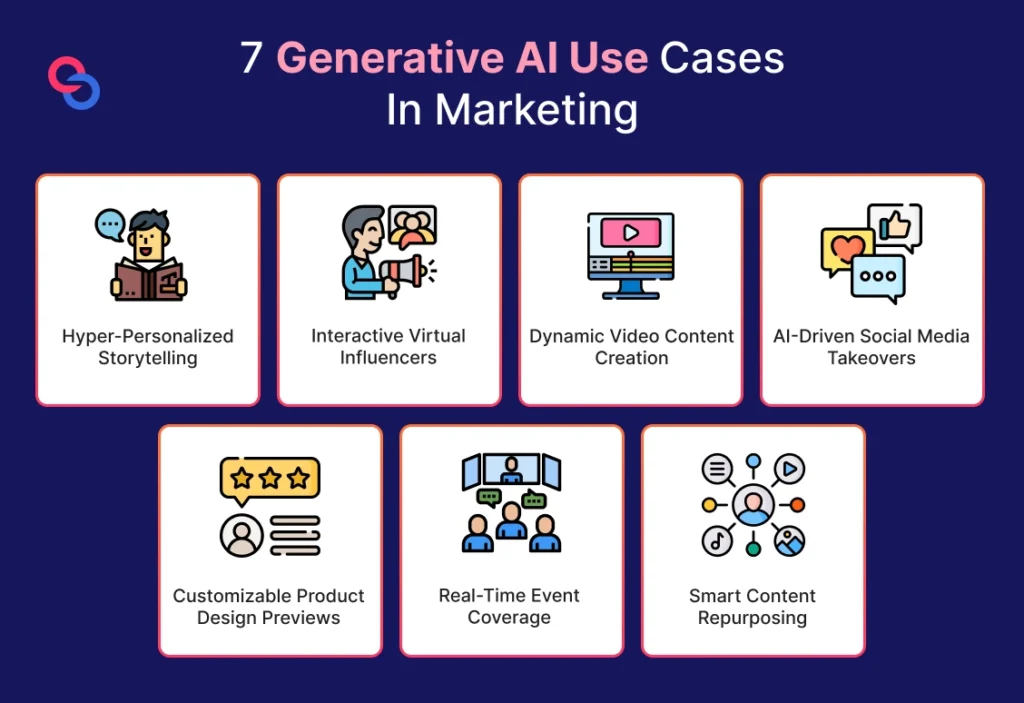
Generative AI has expanded the capabilities of marketing teams significantly.
Applications include:
Content Writing
Generating SEO-friendly articles and landing pages.
Graphic Design
Creating visuals for advertisements and social media.
Video Production
Developing promotional videos and product demonstrations.
Email Marketing
Crafting personalized email sequences.
The integration of generative AI with autonomous agents creates a powerful marketing ecosystem.
Challenges of Implementing AI Agents in Digital Marketing
Despite their benefits, businesses should be aware of several challenges.
Data Privacy Concerns
Organizations must comply with data protection regulations and ensure responsible AI usage.
Content Quality Control
Human oversight remains necessary to maintain accuracy and brand voice.
Integration Complexity
Integrating AI tools with existing marketing systems may require technical expertise.
Ethical Considerations
Businesses must ensure transparency and fairness in AI-driven decision-making.
Best Practices for Using AI Agents in Digital Marketing
To maximize success, marketers should:
Define Clear Objectives
Identify specific goals before implementing AI solutions.
Use High-Quality Data
AI performance depends heavily on data quality.
Maintain Human Oversight
Human creativity and strategic thinking remain essential.
Monitor Performance Continuously
Regular evaluation helps improve outcomes over time.
Focus on Customer Experience
AI should enhance—not replace—meaningful customer relationships.
Future Trends of AI Agents in Digital Marketing
The future of AI Agents in Digital Marketing looks incredibly promising.
Emerging trends include:
Hyper-Personalization
AI will deliver even more individualized experiences.
Autonomous Marketing Systems
Entire campaigns may eventually be managed with minimal human intervention.
Voice Search Optimization
AI agents will help brands adapt to voice-driven customer interactions.
Real-Time Marketing Decisions
Advanced AI systems will optimize campaigns instantly based on customer behavior.
Multi-Agent Marketing Ecosystems
Multiple AI agents will collaborate across content creation, analytics, advertising, and customer engagement.
Why Businesses Should Invest in AI Agents in Digital Marketing
Businesses that adopt AI early gain a significant competitive advantage.
Benefits include:
- Faster growth
- Better customer experiences
- Higher marketing ROI
- Improved efficiency
- Stronger market positioning
As digital competition intensifies, AI agents are becoming an essential component of successful marketing strategies.
Conclusion
AI Agents in Digital Marketing are fundamentally transforming how businesses connect with customers, create content, manage campaigns, and drive growth. By combining automation, machine learning, predictive analytics, and personalization, AI agents enable marketers to achieve levels of efficiency and effectiveness that were previously impossible.
Organizations that embrace AI-powered marketing today will be better positioned to meet evolving customer expectations and outperform competitors in the future. As technology continues to advance, AI agents will become even more sophisticated, making them one of the most influential forces shaping the future of digital marketing.